




Why Does My Cat Lick Me? Decoding This Common Feline Behavior
Understanding Why Your Cat Licks You: Common Reasons
Why does my cat lick me? Cats may lick you to show affection, groom you, communicate, seek attention, or cope with stress. Understanding this behavior can help you better recognize your cat’s needs and emotions.
Affection and Bonding: When Your Cat Licks You Out of Love
One of the most heartwarming reasons for licking is genuine affection. Cats engage in allogrooming, where they groom other members of their social group. When your cat licks you, it’s often treating you as part of its family, a sign of deep feline trust. This behavior signifies a strong bond, much like a mother cat grooming her kittens. Kittens often lick more frequently, as they learn this grooming behavior early on from their mothers. It’s a clear indicator of cat licking for affection, reinforcing your place in their inner circle.
Grooming Rituals: Why Cats Lick Themselves and Others
Cats are renowned for their meticulous hygiene. Their natural grooming instinct is powerful, and they spend a significant portion of their day keeping themselves clean. Sometimes, this innate drive extends to their human companions. Your cat might be attempting to “clean” you, or simply engaging in mutual grooming to reinforce social ties. This is a natural extension of their regular cat grooming habits. To assist with their routine, you might consider using a Self-Cleaning Cat Grooming Brush.
Communication Signals: What Your Cat’s Licking Means
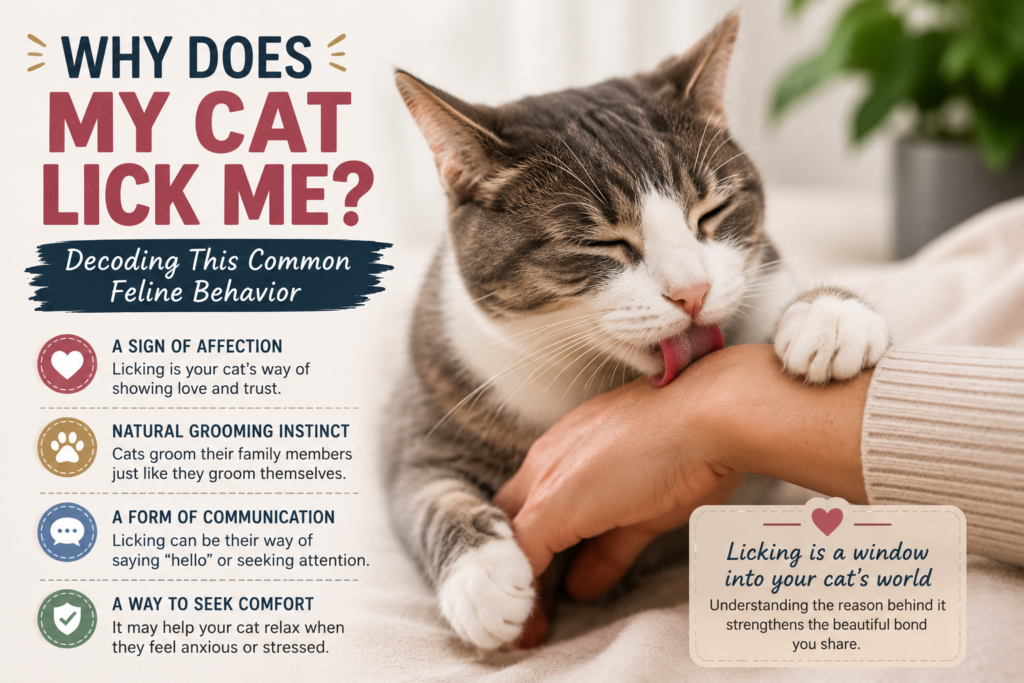
Licking can also serve as a form of cat communication. It might be a gentle way for your cat to get your attention, perhaps signaling a desire for food, play, or petting. Furthermore, licking allows cats to mark you with their scent, an important aspect of their social structure. This scent exchange helps them identify you as part of their territory and family. Therefore, the cat licking meaning can often be a non-verbal dialogue, answering the question, “why does my cat lick me?”
Anxiety or Stress: When Licking Becomes a Coping Mechanism
While often positive, licking can sometimes indicate less favorable emotions. Excessive licking, especially if repetitive or focused on one area, might be a sign of stress, anxiety, or boredom. This is a displacement behavior, where the cat uses grooming to self-soothe. If you notice your cat engaging in cat stress licking, or exhibiting other signs of an anxious cat behavior, such as hiding or changes in appetite, it’s important to investigate the underlying cause.
Seeking Attention: Why Your Cat Might Lick You for Interaction
Cats are intelligent and quickly learn which behaviors elicit a response from their humans. If licking you consistently results in petting, talking, or even a treat, your cat might adopt it as a strategy for cat seeking attention. This is a learned behavior where your cat wants attention and has discovered that licking is an effective way to solicit interaction from you.
Taste and Scent: Exploring the World Through Licking
Cats explore their environment not just with their paws and noses, but also with their mouths. Your skin might carry interesting tastes, such as salt from sweat, or intriguing scents from lotions, soaps, or food residue. This exploratory licking is a manifestation of their natural feline senses and cat taste exploration. Your cat might simply be curious about the unique flavors and smells on your skin, engaging in cat licking skin as a form of investigation.
When Should You Be Concerned About Your Cat Licking You?
While most instances of licking are benign, there are specific situations where cat licking concerns arise. Recognizing these signs is crucial for knowing when to worry about cat licking using recommended cat health tools, and consulting the Cornell Feline Health Center for guidance on feline health.
Excessive Licking and Skin Issues: Signs of Trouble
If your cat’s licking becomes excessive, leading to visible changes on your skin or their own, it warrants attention. Look for signs like hair loss in specific areas on your cat, skin irritation, redness, or even sores. This could indicate allergies, parasites, pain, or a behavioral issue like obsessive-compulsive disorder. If you observe an obsessive licking cat or any of these symptoms, a veterinary consultation is highly recommended.
Sudden Changes in Licking Behavior: A Vet Visit Might Be Needed
Any sudden, drastic change in your cat’s licking frequency or intensity should be noted. If this shift is accompanied by other behavioral changes, such as lethargy, changes in eating habits, or aggression, it could signal an underlying health issue. A significant cat behavior change, especially concerning licking, might indicate pain, illness, or substantial stress, making a cat licking vet check-up a prudent step.
How to Respond When Your Cat Licks You
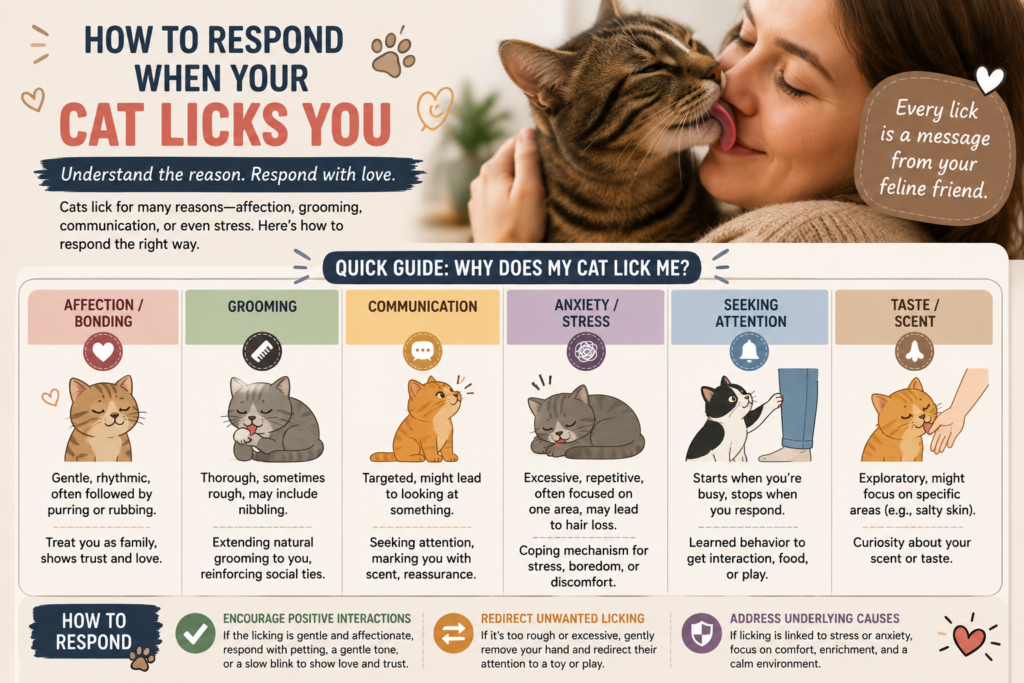
Your reaction to your cat’s licking can influence the behavior. Knowing how to react to cat licking appropriately can either encourage or discourage it, shaping your cat licking response.
Encouraging Positive Interactions: Responding to Your Cat’s Licks
If your cat’s licking is gentle and seems affectionate, respond in kind. Offer soft petting, speak to them in a gentle tone, or give them a slow blink to show you appreciate their gesture. This reinforces the positive bond and communicates that their affection is reciprocated. Understanding “why does my cat lick me” in this context helps you provide an appropriate and loving response, fostering a strong positive cat interaction.
Redirecting Undesirable Licking: Managing Excessive Behavior
If the licking is too rough, excessive, or simply unwanted, gently remove your hand or redirect their attention. Offer a favorite toy or initiate a play session instead. Avoid harsh punishment, as this can damage trust. If you suspect the excessive licking stems from stress, focus on addressing the underlying cause through Cat Calming Pheromone Diffuser to help manage stress. This approach helps you manage cat licking effectively and redirect cat behavior.
Quick Guide: Why Does My Cat Lick Me?
| Reason | Characteristics | What it Means |
| Affection/Bonding | Gentle, rhythmic, often followed by purring or rubbing | Treats you as family, shows trust and love |
| Grooming | Thorough, sometimes rough, may include nibbling | Extending natural grooming to you, reinforcing social ties |
| Communication | Targeted, might lead to looking at something | Seeking attention, marking you with scent, reassurance |
| Anxiety/Stress | Excessive, repetitive, often focused on one area, may lead to hair loss | Coping mechanism for stress, boredom, or discomfort |
| Seeking Attention | Starts when you’re busy, stops when you respond | Learned behavior to get interaction, food, or play |
| Taste/Scent | Exploratory, might focus on specific areas (e.g., salty skin) | Curiosity about your scent or taste |
Common Questions About Cats Licking
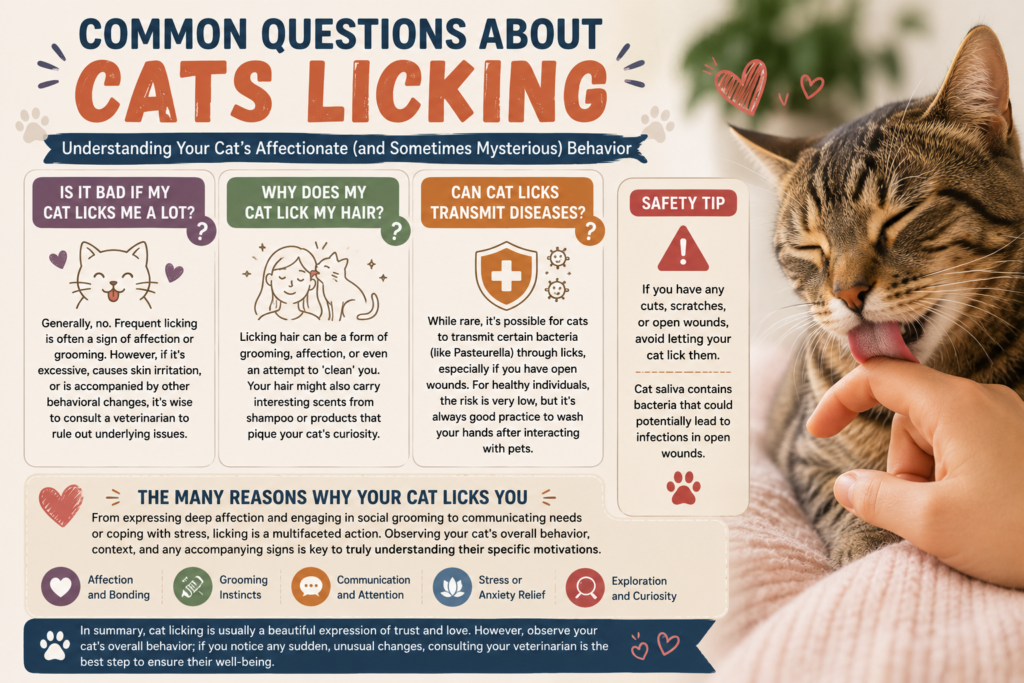
Is it bad if my cat licks me a lot?
Generally, no. Frequent licking is often a sign of affection or grooming. However, if it’s excessive, causes skin irritation, or is accompanied by other behavioral changes, it’s wise to consult a veterinarian to rule out underlying issues. This addresses a common cat licking FAQ.
Why does my cat lick my hair?
Licking hair can be a form of grooming, affection, or even an attempt to ‘clean’ you. Your hair might also carry interesting scents from shampoo or products that pique your cat’s curiosity, making it a form of cat licking questions about exploration.
Can cat licks transmit diseases?
While rare, it’s possible for cats to transmit certain bacteria (like Pasteurella) through licks, especially if you have open wounds. Safety Tip: If you have any cuts, scratches, or open wounds, avoid letting your cat lick them. Cat saliva contains bacteria that could potentially lead to infections in open wounds. For healthy individuals, the risk is very low, but it’s always good practice to wash your hands after interacting with pets.
The Many Reasons Why Your Cat Licks You
The question “why does my cat lick me?” reveals a rich tapestry of feline behaviors. From expressing deep affection and engaging in social grooming to communicating needs or coping with stress, licking is a multifaceted action. Observing your cat’s overall behavior, context, and any accompanying signs is key to truly understanding their specific motivations. This deeper understanding cat licking strengthens the unique and rewarding bond you share with your feline companion.
In summary, cat licking is usually a beautiful expression of trust and love. However, observe your cat’s overall behavior; if you notice any sudden, unusual changes, consulting your veterinarian is the best step to ensure their well-being.
If you are interested in learning more about feline health, check out our guide on the average cat lifespan.
