





Can Dogs Eat Strawberries? An Expert Guide to Safe Snacking
Many dog owners wonder about sharing human foods with their pets. A common question that arises is: can dogs eat strawberries? These vibrant red berries are a popular treat for people, known for their sweet taste and nutritional value. However, before offering them to your furry friend, it’s essential to understand the safety guidelines, potential benefits, and any risks involved. This guide provides an expert perspective on whether dogs can safely enjoy strawberries as part of their diet.
The Verdict: Can Dogs Eat Strawberries Safely?
The straightforward answer is yes, dogs can eat strawberries. These fruits are generally safe for canine consumption when offered in moderation and prepared correctly. Strawberries are not toxic to dogs, unlike some other fruits. However, like any human food introduced to a dog’s diet, careful consideration of portion sizes and preparation is crucial to ensure your dog’s well-being. Understanding the components of strawberries helps clarify why they are typically safe for dogs.
Nutritional Benefits of Strawberries for Dogs
When dogs eat strawberries, they can gain several nutritional advantages. Strawberries are packed with beneficial nutrients that contribute to a dog’s overall health. They are an excellent source of:
- Vitamin C: An antioxidant that supports the immune system. While dogs produce their own Vitamin C, an extra boost from natural sources can be beneficial, especially for older or stressed dogs.
- Fiber: Aids in healthy digestion and can help regulate bowel movements.
- Antioxidants: Such as anthocyanins (which give strawberries their red color) and ellagic acid, which help combat free radicals and reduce inflammation.
- Manganese: Important for bone health and metabolism.
- Potassium: Essential for nerve and muscle function.
These benefits make strawberries for dogs a healthy occasional treat, provided they are given appropriately.
How to Safely Feed Strawberries to Your Dog

Ensuring your dog enjoys strawberries safely involves proper preparation and understanding what to avoid. Following a few simple steps can help you feed strawberries to your dog without issues.
Proper Preparation and Serving Sizes
To safely give dogs strawberries, begin by selecting fresh, ripe berries. If possible, choose organic strawberries to minimize pesticide exposure. Always wash the strawberries thoroughly under running water to remove any dirt, pesticides, or contaminants. Crucially, remove the green leafy tops and stems, as these can be difficult for dogs to digest and may pose a choking hazard, especially for smaller breeds.
Once washed and destemmed, cut the strawberries into small, manageable pieces. For small dogs or puppies, quartering a strawberry or mashing it might be best. Larger dogs can handle slightly larger pieces, but always ensure they are small enough to prevent choking. When considering how much strawberries dogs can have, moderation is key. Treats, including fruit, should make up no more than 10% of your dog’s daily caloric intake. A few small pieces a day for a medium-sized dog is generally a good starting point. If your dog tends to eat treats too quickly, a slow feeder dog bowl can help encourage a slower eating pace. Always introduce new foods slowly to monitor for any adverse reactions. Always introduce new foods slowly to monitor for any adverse reactions. For convenient pet food and treat storage, an airtight dog food storage container can help keep your dog’s food fresh and organized.
What to Avoid When Giving Dogs Strawberries
While fresh, plain strawberries are safe, certain forms and additions can be harmful. Avoid giving your dog:
- Stems and Leaves: As mentioned, these can cause digestive upset and choking.
- Added Sugars: Strawberries covered in sugar, chocolate, or syrups are unhealthy and can lead to weight gain or other health issues. Chocolate is toxic to dogs.
- Artificial Sweeteners: Products containing artificial sweeteners, especially xylitol, are extremely dangerous. Xylitol is highly toxic to dogs and can cause a rapid drop in blood sugar, liver failure, and even death. Always check ingredient labels carefully.
- Processed Strawberry Products: Jams, jellies, yogurts, or baked goods containing strawberries often have high sugar content, artificial ingredients, or other harmful additives. Stick to fresh, whole fruit.
Understanding these dogs eat strawberries risks helps protect your pet.
Potential Risks and Considerations When Dogs Eat Strawberries

Even though dogs eat strawberries safely in most cases, there are specific situations and individual sensitivities that warrant caution. Being aware of these potential issues helps ensure a positive experience for your dog.
Allergic Reactions and Digestive Upset
Just like humans, some dogs can develop allergies to certain foods, including strawberries. When introducing strawberries for the first time, offer a very small piece and observe your dog for any signs of an allergic reaction. Symptoms might include:
- Itching or excessive scratching
- Facial swelling (especially around the muzzle or eyes)
- Hives
- Vomiting or diarrhea
- Difficulty breathing (in severe cases)
If you notice any of these signs, discontinue feeding strawberries and consult your veterinarian immediately. Additionally, consuming too many strawberries, even for a dog without allergies, can lead to digestive upset, such as diarrhea or a mild stomach ache, due to their fiber content. This is why moderation is so important.
Sugar Content and Diabetic Dogs
Strawberries contain natural sugars. While these are generally fine in small amounts for healthy dogs, the sugar content becomes a significant consideration for dogs with certain health conditions. For instance, diabetic dogs strawberries consumption should be strictly monitored and ideally approved by a veterinarian. The natural sugars can affect blood glucose levels. Similarly, overweight dogs should consume strawberries sparingly, as excess sugar contributes to calorie intake and can hinder weight management efforts. Always discuss new treats with your vet if your dog has underlying health issues or specific dietary needs.
Quick Reference: Can Dogs Eat Strawberries?
Here’s a summary to quickly answer the question, can dogs eat strawberries, and provide essential details:
| Category | Details |
|---|---|
| Safety Status | Generally safe in moderation |
| Safe Parts | Flesh of the berry (washed, destemmed, cut) |
| Unsafe Parts/Forms | Stems, leaves, processed products, those with added sugar or xylitol |
| Key Benefits | Vitamin C, fiber, antioxidants, manganese, potassium |
| Potential Risks | Choking, digestive upset, allergic reactions, high sugar for diabetic/overweight dogs |
| Serving Tips | Wash thoroughly, remove stems/leaves, cut into small pieces, offer in moderation |
Other Safe Fruits for Dogs (And What to Avoid)
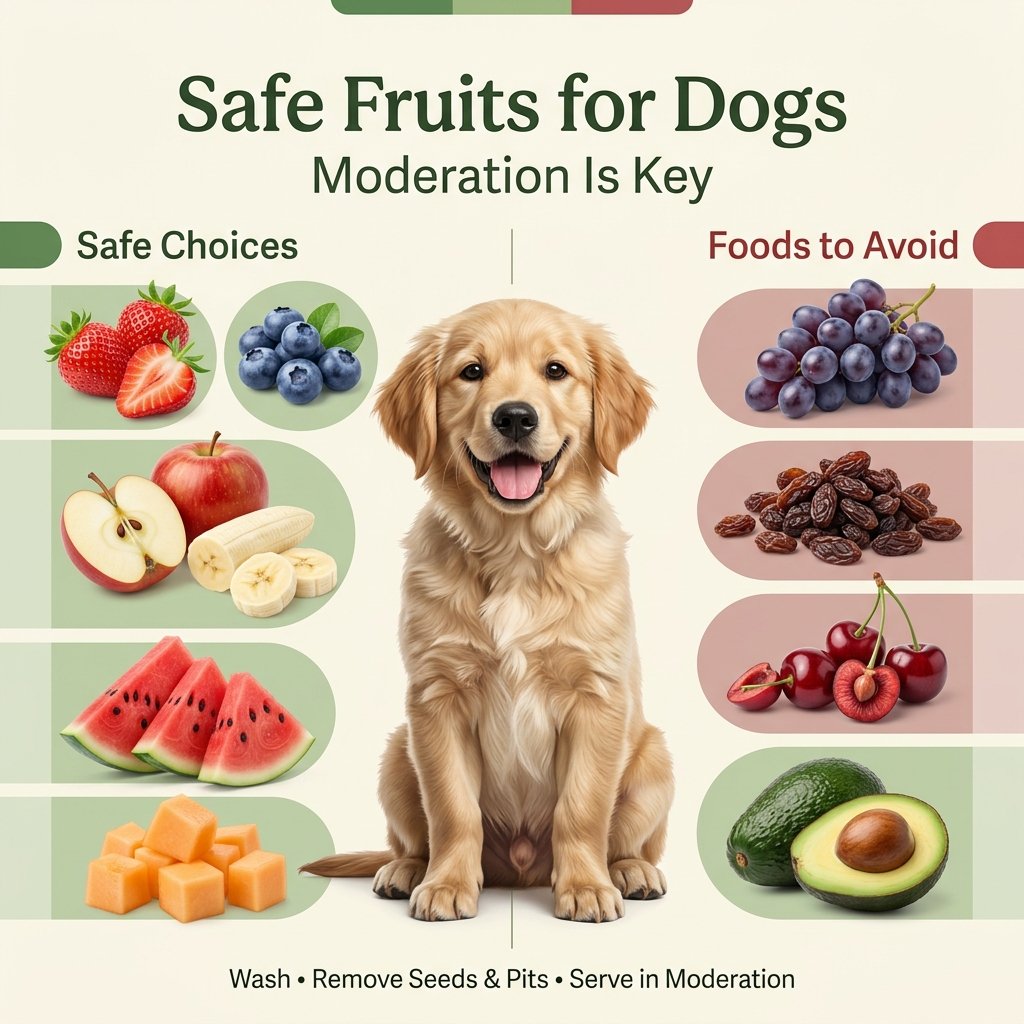
Beyond strawberries, many other fruits can be safe and healthy treats for your dog. Examples of safe fruits for dogs include blueberries, apples (without seeds or core), bananas, watermelon (without rind or seeds), and cantaloupe. These can offer a variety of nutrients and flavors.
Conversely, some fruits are toxic and should never be given to dogs. These include grapes and raisins (highly toxic, can cause kidney failure), cherries (pits contain cyanide), and avocados (persin in the pit, skin, and leaves can be toxic). Always research a fruit before offering it to your dog. For a more extensive list of safe and unsafe fruits, you can refer to resources like the ASPCA’s toxic and non-toxic plant list or a detailed guide on safe fruits for dogs.
Frequently Asked Questions About Dogs and Strawberries

Here are answers to common questions about whether can dogs eat strawberries.
Can puppies eat strawberries?
Yes, puppies can eat strawberries, but with extra caution. Their digestive systems are more sensitive than adult dogs. Offer a very small amount, ensuring it’s cut into tiny, easily chewable pieces. Monitor them closely for any signs of digestive upset or allergic reactions. It’s always best to consult your veterinarian before introducing new foods to a puppy’s diet.
What if my dog eats too many strawberries?
If your dog consumes too many strawberries, the most likely outcome is digestive upset, such as diarrhea, vomiting, or a mild stomach ache, due to the fiber and natural sugar content. While generally not life-threatening, it can be uncomfortable for your dog. Ensure they have access to plenty of fresh water. If symptoms are severe, persistent, or if you notice any unusual behavior, contact your veterinarian for advice.
Are frozen strawberries safe for dogs?
Yes, frozen strawberries are safe for dogs and can be a refreshing treat, especially during warmer weather. Ensure they are prepared in the same way as fresh strawberries: washed, destemmed, and cut into appropriate, small sizes to prevent choking. For very small dogs, allow the frozen berry to thaw slightly or mash it to avoid any dental issues or choking hazards.
Conclusion: Sharing Strawberries with Your Canine Companion
In summary, the answer to can dogs eat strawberries is a resounding yes, provided they are given responsibly. These delicious berries can be a healthy, low-calorie treat for your dog, offering valuable vitamins, fiber, and antioxidants. Remember to always wash them thoroughly, remove stems and leaves, and cut them into small pieces. Moderation is paramount, especially for dogs with diabetes or those prone to weight gain. By following these guidelines, you can safely share the goodness of strawberries for dogs, adding a delightful and nutritious snack to their diet. When in doubt about any new food, a quick consultation with your veterinarian is always the best course of action.
