




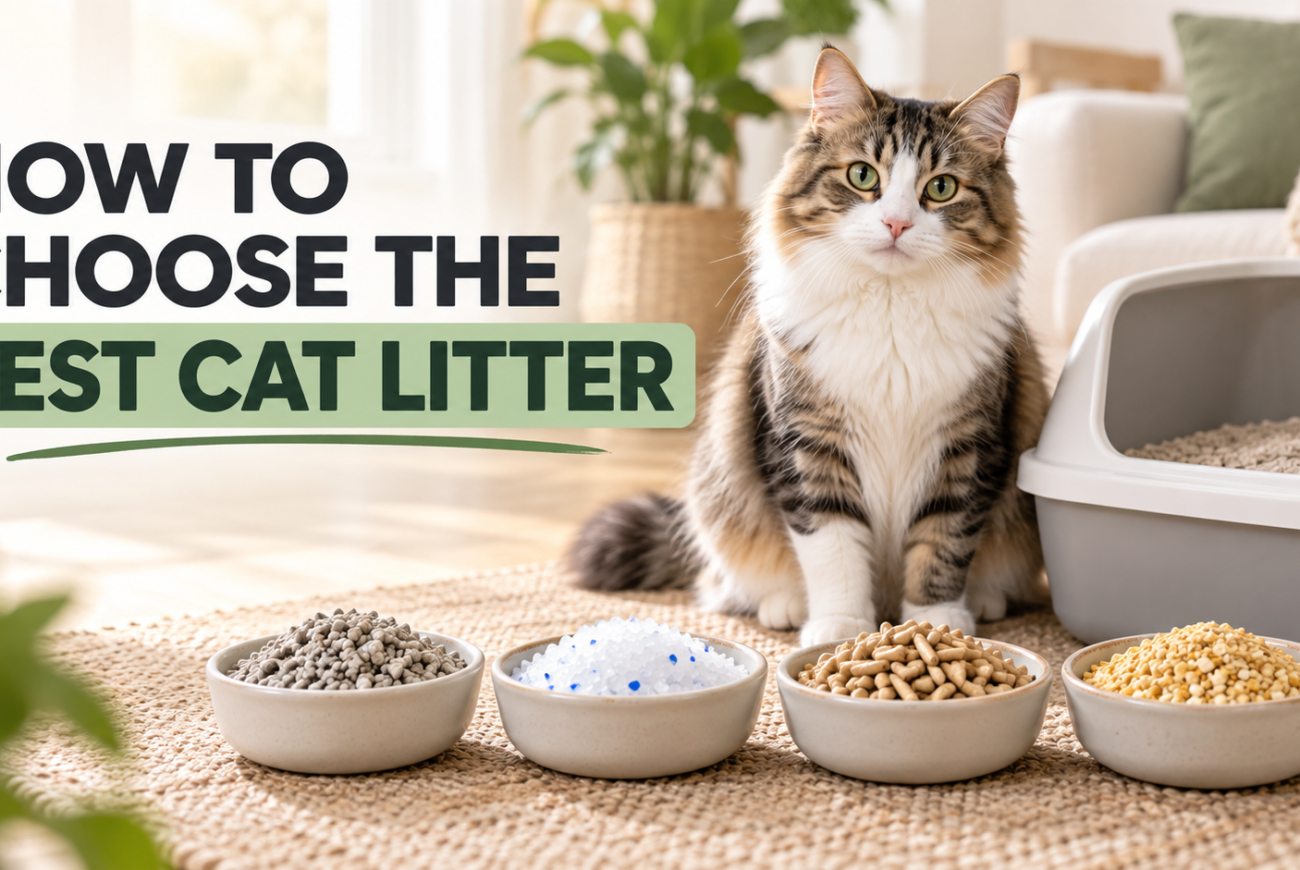
How to Choose the Best Cat Litter: Complete Buying Guide
Choosing the right litter is essential for your cat’s health and a clean home. In fact, finding the best cat litter directly affects whether your pet comfortably uses the box. Because so many options exist, picking the right formula can feel overwhelming. However, this comprehensive guide explores popular litter types, key selection factors, and maintenance tips to simplify your search. Additionally, pairing proper box care with cat breeds that don’t shed helps maintain an allergy-friendly home.
Understanding Different Types of Cat Litter
Today’s market features several distinct litter formulas. Therefore, understanding these options is the first step toward finding the best cat litter for your home.
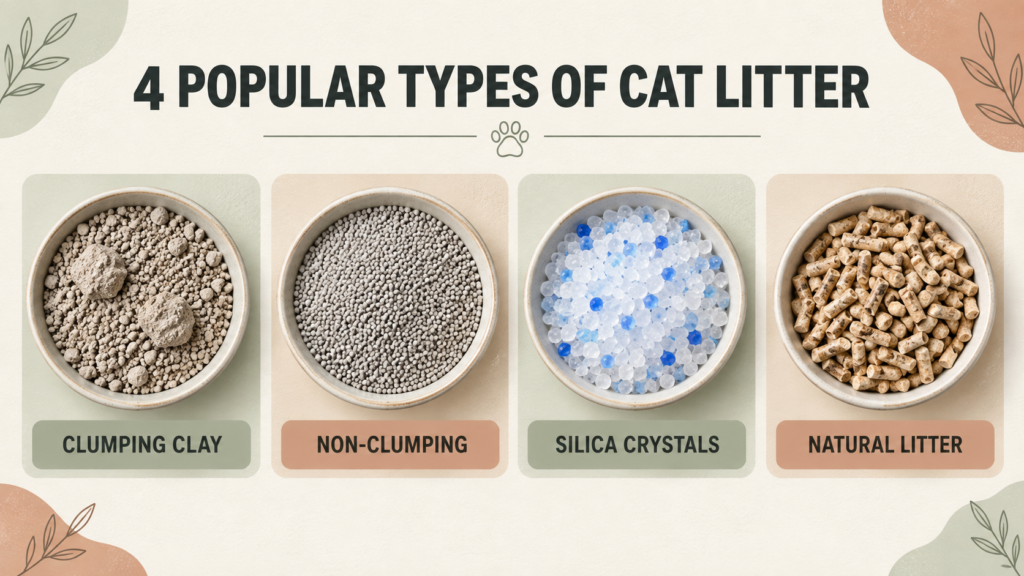
Clumping Clay Litter for Easy Scooping
Clumping clay litter usually contains bentonite clay, as seen in Purina Tidy Cats Clumping Cat Litter. Moisture causes this material to form tight clumps, which makes daily scooping quick and straightforward. Furthermore, its dense structure helps trap odors reliably. On the downside, heavy bags can be tough to lift, and minor dust may irritate sensitive lungs. Nevertheless, many owners consider clumping formulas the best cat litter for daily convenience.
Non-Clumping Litter: Traditional and Absorbent Options
Non-clumping formulas soak up liquid without forming firm solid masses. As a result, you must replace the entire tray contents regularly to control odors. Although these products cost less up front, frequent tray swaps increase long-term usage. Consequently, while budget-friendly, non-clumping varieties are rarely the best cat litter for lasting smell control.
Silica Gel Litter: High-Tech Odor Control Solutions
Silica gel options, like PetSafe ScoopFree Crystal Cat Litter, use micro-porous crystals that instantly absorb liquids. Subsequently, trapped moisture evaporates while odor molecules stay locked inside. A single tray can last several weeks with basic daily stirring. Although crystal formulas carry higher upfront costs, their exceptional longevity makes silica crystals the best cat litter for low-maintenance odor control.
Natural and Eco-Friendly Litter Options
Eco-conscious owners often choose plant-based materials like pine, corn, wheat, paper, or walnut shells. Popular products like World’s Best Cat Litter leverage whole-kernel corn for strong clumping. In addition, these lightweight formulas generate minimal dust and biodegrade naturally. Because they combine sustainability with strong absorption, plant formulas rank as the best cat litter for eco-friendly households.
Key Factors to Consider When Choosing Litter
To select the best cat litter for your household, evaluate several key performance factors carefully.
Odor Control: Keeping Your Home Fresh
Reliable odor control keeps your living space smelling fresh. For instance, activated carbon and baking soda trap smell molecules effectively. Meanwhile, multi-cat households require stronger neutralizers to manage heavy box usage.
Dust Levels: For Respiratory Health
Airborne dust irritates feline and human respiratory systems alike. Fortunately, low-dust and dust-free litters protect delicate lungs. Therefore, choosing dust-reduced formulas benefits cats with asthma or chronic allergies.
Tracking: Minimizing Mess Around the House
Fine granules often stick to paw pads and scatter across floors. Conversely, larger pellets or crystals remain inside the box. Additionally, placing a specialized cat litter mat outside the entrance captures stray particles instantly.
Cat Preference: What Your Feline Really Wants
Ultimately, your cat makes the final decision. Most felines prefer fine, unscented textures because heavy artificial fragrances can repel sensitive noses. Thus, watching your pet’s behavioral cues will reveal their preferred best cat litter.
Environmental Impact & Disposal: Sustainable Litter Choices
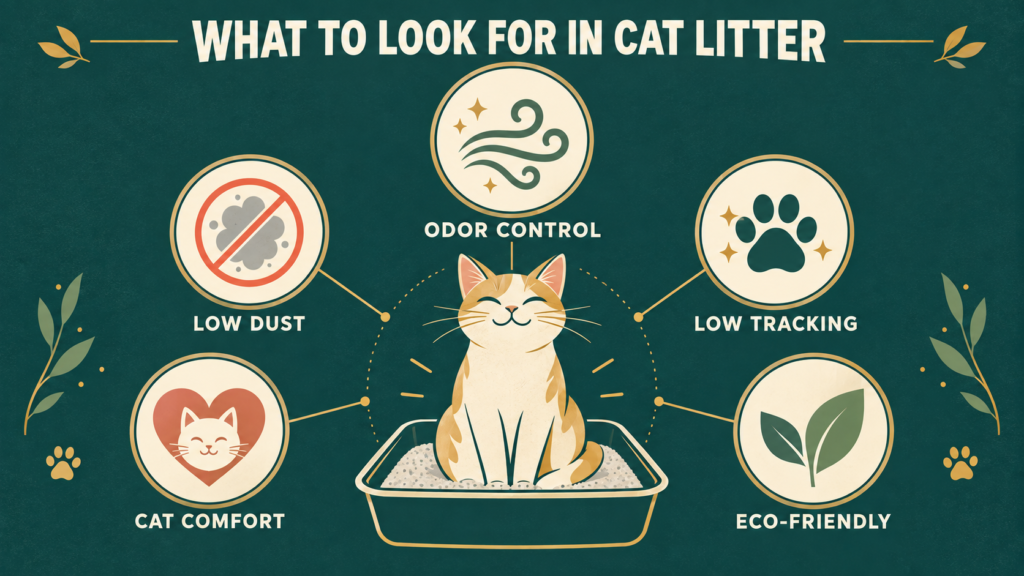
Clay mining impacts natural landscapes, whereas plant-based alternatives utilize renewable crops. Furthermore, biodegradable formulas reduce landfill accumulation. Checking local disposal guidelines ensures environmentally responsible waste handling.
Top Picks: Comparing Popular Litter Products
While specific product names are illustrative, understanding categories helps identify the best cat litter for various needs.
Best for Superior Odor Control
Silica gel litters and premium clumping clay litters with activated charcoal are often lauded for their exceptional odor elimination. These formulations excel at trapping and neutralizing unpleasant smells, keeping your home fresher for longer.
Best Low-Dust Cat Litter
Many brands now offer specific low-dust or dust-free versions of their clumping clay and natural litters. Paper-based litters and some pelletized natural options are also excellent choices for minimizing airborne particles.
Best Eco-Friendly and Natural Cat Litter
Pine, corn, wheat, and paper leads the way in eco-friendly care. Because these formulas use renewable resources, they represent the best cat litter for sustainable households.
Best Value Cat Litter
Traditional non-clumping clay litter often represents the lowest initial cost. However, considering longevity and performance, some clumping clay litters or even silica gel litters can offer better long-term value due to less frequent full changes.
Cat Litter Comparison Table
| Litter Type | Odor Control | Dust Level | Tracking | Absorbency | Environmental Impact |
| Clumping Clay | Good to Excellent | Moderate to High | Moderate to High | Excellent | High (landfill) |
| Non-Clumping Clay | Fair to Good | Moderate | Moderate | Good | High (landfill) |
| Silica Gel (Crystal) | Excellent | Low | Low to Moderate | Excellent | Moderate (landfill) |
| Pine | Good | Low | Low | Good | Low (biodegradable) |
| Corn/Wheat | Good to Excellent | Low to Moderate | Moderate | Excellent | Low (biodegradable) |
| Paper | Fair to Good | Very Low | Low | Good | Low (recycled/biodegradable) |
Your Buying Guide to the Best Cat Litter
Choosing the best cat litter requires matching product features to your pet’s needs and lifestyle.
Consider Your Cat’s Health and Habits
A cat’s age, health conditions (e.g., respiratory issues, declawed paws), and existing litter box habits should influence your choice. Older cats or those with sensitive paws might prefer softer textures. Cats with asthma benefit from dust-free options. Always prioritize your cat’s comfort and health.
Evaluate Your Household Needs
Think about your household size, the number of cats you own, and your home’s ventilation. Multiple cats often require more robust odor control and more frequent scooping. Your budget also plays a role, balancing initial cost with long-term performance and convenience.
Trial and Error: Finding the Perfect Match
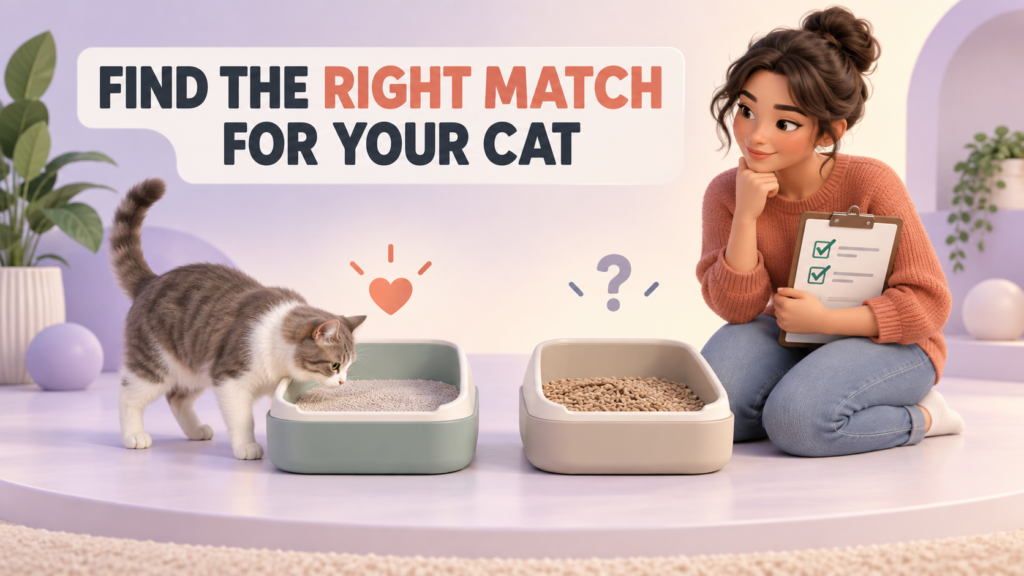
It’s rare to find the perfect litter on the first try. Introduce new litters gradually, perhaps by mixing a small amount with your current litter or offering a separate litter box with the new type. Observe your cat’s reaction closely. Their acceptance is the ultimate indicator of the best cat litter for them.
Maintaining Your Cat’s Litter Box for Optimal Hygiene
Even the best cat litter requires proper maintenance to ensure a clean and inviting space for your cat.
Daily Scooping and Regular Cleaning
Scoop waste daily using a sturdy metal cat litter scoop. Additionally, wash the entire tray with mild soap every few weeks. Regular maintenance keeps the box sanitary and inviting.
Litter Box Placement and Quantity
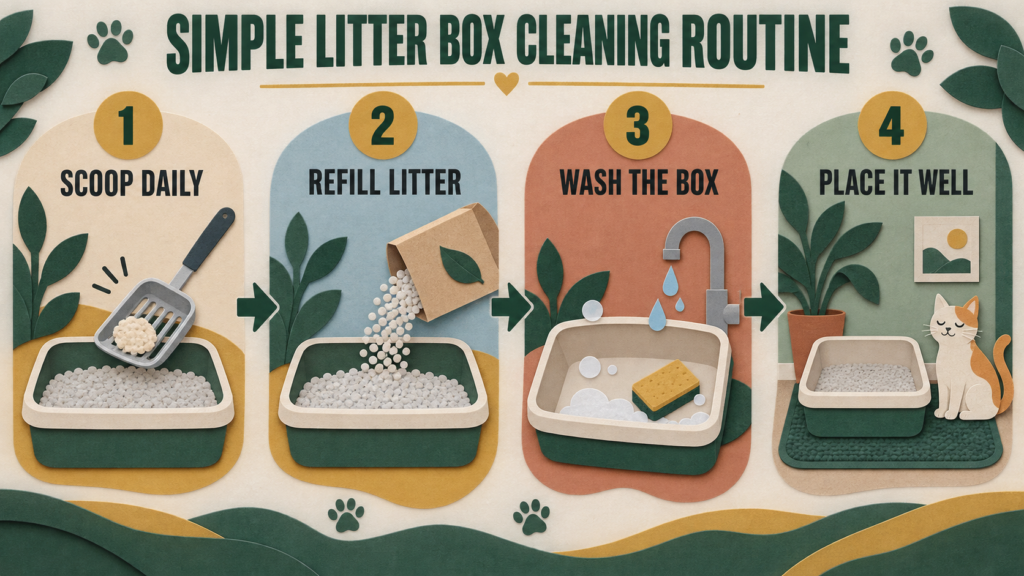
Place litter boxes in quiet, accessible locations where your cat feels safe and has privacy. Avoid high-traffic areas or places near their food and water bowls. A common guideline is to have one litter box per cat, plus one extra, to prevent territorial issues and ensure options are always available.
Frequently Asked Questions About the Best Cat Litter
How often should I change my cat’s litter?
For clumping litter, scoop daily and replenish as needed, with a full change every 2-4 weeks. Non-clumping litter requires full changes every 3-7 days. Silica gel litter can last 2-4 weeks with daily stirring and waste removal. The frequency also depends on the number of cats using the box.
Can I mix different types of cat litter?
You can mix litters, especially during a transition period to help your cat adjust to a new type. Some owners mix a small amount of activated charcoal into their regular litter for enhanced odor control. However, mixing different base materials (e.g., clay and pine pellets) might compromise the performance of each, such as clumping ability.
What if my cat suddenly stops using the litter box?
A sudden change in litter box habits often signals an underlying issue. This could be a medical problem (e.g., urinary tract infection, arthritis), stress, dissatisfaction with the litter type, or a dirty litter box. Consult your veterinarian first to rule out health concerns. If medical issues are excluded, evaluate the litter type, cleanliness, and location of the box.
Final Thoughts on Finding the Best Cat Litter
Identifying the best cat litter is a personalized journey, influenced by your cat’s unique preferences, your household’s needs, and your environmental values. There isn’t a single universal answer, but rather an optimal choice for each individual situation. By understanding the different litter types and considering key factors like odor control, dust, tracking, and your cat’s comfort, you can make an informed decision. Experimentation and observation are key to discovering the perfect match. For further guidance, consider consulting your veterinarian or a feline behaviorist.
