





How to Stop Dog Barking: An Expert Guide to Quieting Your Canine
Barking is a natural and essential form of communication for dogs. However, when barking becomes excessive or disruptive, it can strain the relationship between a dog and its owner, and even cause issues with neighbors. Understanding the underlying reasons behind your dog’s vocalizations is the crucial first step in addressing the behavior. This guide provides expert, actionable strategies on how to stop dog barking effectively and humanely, fostering a calmer and more harmonious home environment.
Why Do Dogs Bark? Decoding Canine Communication

Dogs bark for a variety of reasons, using their voices to express emotions, needs, and reactions to their surroundings. Identifying the specific cause of your dog’s barking is paramount to implementing an effective solution. Each type of barking often requires a different approach.
Territorial or Alarm Barking
This type of barking occurs when a dog perceives a threat or intrusion into its territory. Triggers often include strangers approaching the home, other animals passing by, or unexpected noises. The dog barks to alert its family and deter the perceived intruder. To stop alarm barking, environmental management is often key.
Attention-Seeking Barking
Some dogs learn that barking is an effective way to get what they want. This could be attention, food, playtime, or to be let outside. Owners might inadvertently reinforce this behavior by responding to the barking, even if it’s to scold the dog. This teaches the dog that barking yields a reaction, making it harder to stop attention barking.
Boredom or Loneliness Barking
Dogs are social animals and require physical and mental stimulation. When left alone for extended periods without adequate engagement, dogs may resort to barking out of boredom or loneliness. This can be a repetitive, monotonous bark, often accompanied by pacing or destructive behaviors. Addressing boredom barking and loneliness barking requires increased interaction and enrichment.
Fear or Anxiety-Related Barking
Barking can also be a manifestation of fear or anxiety. This might be triggered by specific stimuli like thunderstorms, fireworks, or unfamiliar objects. In some cases, it’s a symptom of separation anxiety, where the dog barks excessively when left alone due to distress. Addressing anxiety barking or fear barking often involves desensitization and counter-conditioning techniques, and sometimes professional intervention.
Compulsive Barking
Less common but still a possibility, compulsive barking is repetitive, seemingly purposeless barking that can occur for extended periods. This might indicate an underlying medical or behavioral issue. If you suspect compulsive barking, a veterinary consultation is recommended to rule out health problems.
Effective Training Strategies: How to Stop Dog Barking

Once you’ve identified the reason behind your dog’s barking, you can implement targeted training strategies. Consistency, patience, and positive reinforcement are fundamental to successfully teaching your dog new behaviors and reducing excessive vocalization. These practical steps are essential for anyone wondering how to stop dog barking effectively.
Teaching the ‘Quiet’ Command
The ‘Quiet’ command is a powerful tool for managing barking. Start by letting your dog bark a few times at a trigger (e.g., a knock at the door). Then, interrupt the barking with a firm ‘Quiet’ command. When your dog stops barking, even for a second, immediately reward them with a high-value treat and praise. Gradually increase the duration your dog must be quiet before receiving the reward. This helps to train dog to be quiet on cue.
Managing the Environment and Triggers
Environmental management plays a significant role in preventing barking. If your dog barks at passersby, consider blocking their view with privacy film, curtains, or fences. For outdoor noises, white noise machines or calming music can help mask sounds. When guests arrive, manage greetings by keeping your dog on a leash initially or in a separate room until they are calm. These steps help to manage barking triggers proactively.
Desensitization and Counter-Conditioning
For fear or anxiety-related barking, desensitization and counter-conditioning are effective. This involves gradually exposing your dog to the trigger at a low intensity while creating a positive association. For example, if your dog barks at the doorbell, start by playing a recording of the doorbell sound at a very low volume, rewarding your dog for remaining calm. Slowly increase the volume over time. This process helps with desensitization for barking and changes your dog’s emotional response.
Ensuring Adequate Exercise and Mental Stimulation
Many barking issues stem from pent-up energy or boredom. Ensure your dog receives sufficient physical activity tailored to their breed and age. Daily walks, runs, or playtime can significantly reduce the likelihood of boredom-related barking. Additionally, provide mental stimulation through puzzle toys, training sessions, or scent work. A tired dog is often a quiet dog, and proper dog exercise and mental stimulation for dogs are vital components of a balanced life.
Tools and Aids to Help Stop Dog Barking

While training is the cornerstone of addressing excessive barking, certain tools can assist the process. It’s crucial to remember that these should be used as aids to training, not as standalone solutions or replacements for consistent behavioral work. When considering aids for barking, always prioritize humane options.
Bark Collars (Citronella, Vibration)
Certain types of bark collars can be used as training aids. Citronella collars emit a harmless spray when the dog barks, which can be startling and unpleasant. Vibration collars deliver a gentle vibration. These tools can interrupt barking and provide a negative consequence, but they must be used correctly and in conjunction with positive reinforcement training. Professional guidance is highly recommended to ensure humane and effective use. Avoid any collars that deliver electric shocks, as these can cause fear and anxiety, potentially worsening barking issues.
Calming Products and Supplements
For dogs whose barking is rooted in anxiety, calming products or supplements might offer some relief. These can include pheromone diffusers, calming chews containing ingredients like L-theanine or tryptophan, or specialized diets. A heartbeat comfort toy can also provide a calming source of comfort for dogs experiencing stress or anxiety. Always consult your veterinarian before introducing any new supplements to ensure they are safe and appropriate for your dog. These calming dog products can help reduce overall stress levels, which may in turn reduce anxiety-induced barking.
Enrichment Toys and Puzzles
Interactive toys and food puzzles are excellent for keeping dogs mentally engaged, especially when you cannot actively supervise them. Toys that dispense treats as your dog plays can keep them occupied for extended periods, reducing the likelihood of boredom barking. These enrichment toys provide a positive outlet for energy and focus.
Common Barking Types and Solutions: A Quick Reference
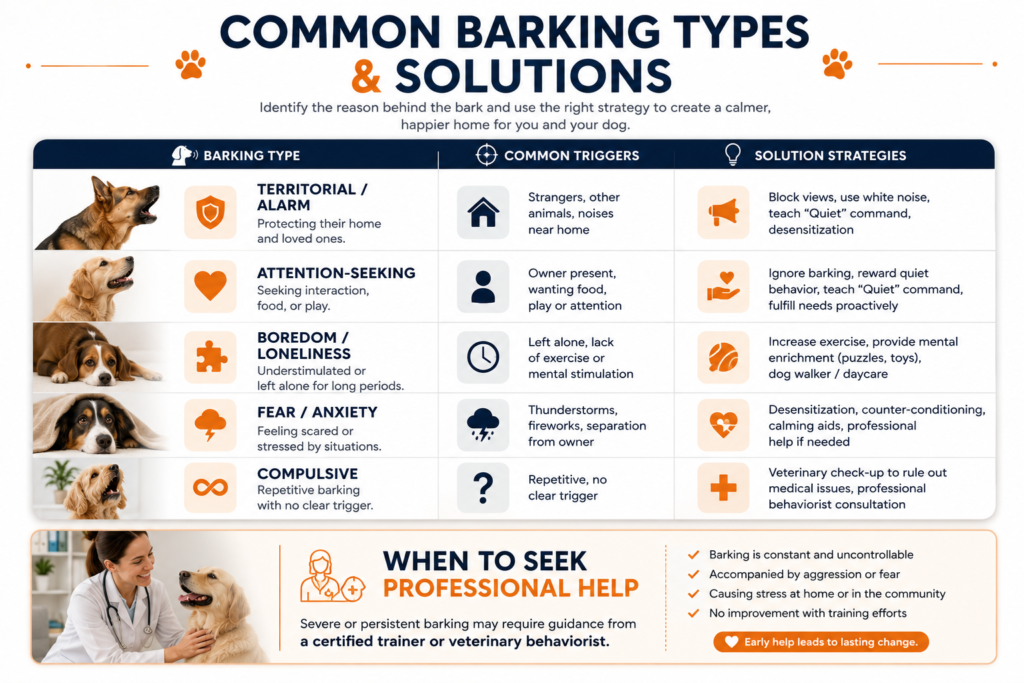
To help you quickly identify and address your dog’s vocalizations, here’s a summary of common barking types and effective strategies on how to stop dog barking.
| Barking Type | Common Triggers | Solution Strategies |
|---|---|---|
| Territorial/Alarm | Strangers, other animals, noises near home | Block views, use white noise, ‘Quiet’ command, desensitization |
| Attention-Seeking | Owner present, wanting food/play/attention | Ignore barking, reward quiet behavior, teach ‘Quiet’ command, fulfill needs proactively |
| Boredom/Loneliness | Left alone, lack of stimulation | Increase exercise, provide mental enrichment (puzzles), dog walker/daycare |
| Fear/Anxiety | Thunderstorms, fireworks, separation from owner | Desensitization, counter-conditioning, calming aids, professional help |
| Compulsive | Repetitive, no clear trigger | Veterinary check-up, professional behaviorist consultation |
When to Seek Professional Help for Excessive Barking
While many barking issues can be managed with consistent training, some situations warrant professional intervention. If your dog’s barking is severe, persistent, or accompanied by other concerning behaviors (e.g., aggression, destructive chewing, self-mutilation), it’s time to consult an expert. A certified professional dog trainer or a veterinary behaviorist can provide a tailored assessment and develop a comprehensive behavior modification plan. They can also rule out any underlying medical conditions contributing to the barking.
Frequently Asked Questions About Stopping Dog Barking
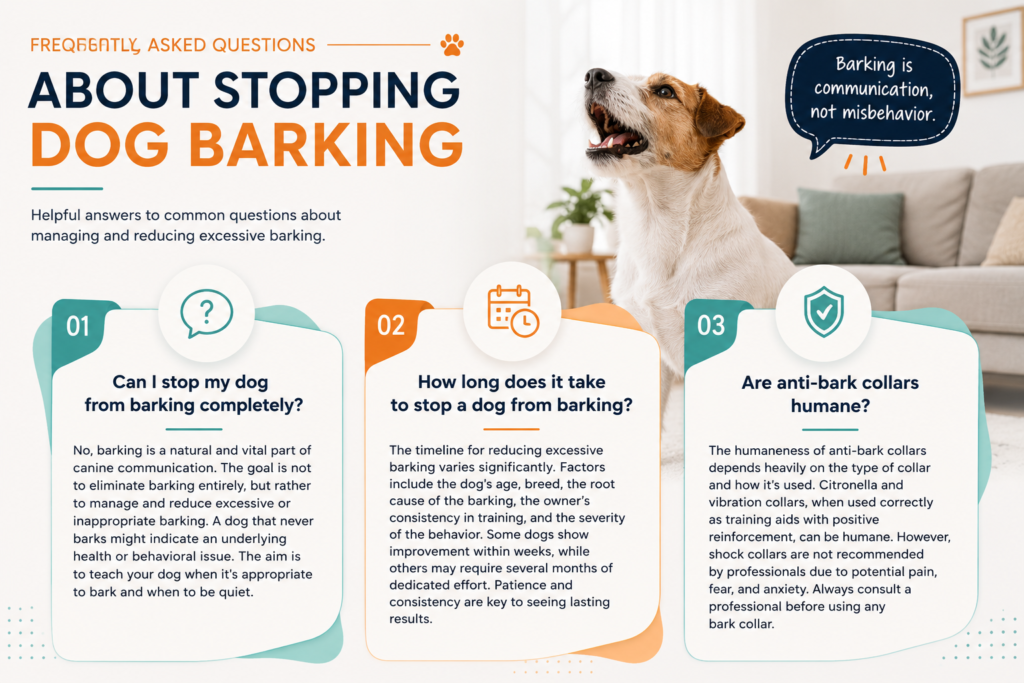
Can I stop my dog from barking completely?
No, barking is a natural and vital part of canine communication. The goal is not to eliminate barking entirely, but rather to manage and reduce excessive or inappropriate barking. A dog that never barks might indicate an underlying health or behavioral issue. The aim is to teach your dog when it’s appropriate to bark and when to be quiet.
How long does it take to stop a dog from barking?
The timeline for reducing excessive barking varies significantly. Factors include the dog’s age, breed, the root cause of the barking, the owner’s consistency in training, and the severity of the behavior. Some dogs show improvement within weeks, while others may require several months of dedicated effort. Patience and consistency are key to seeing lasting results.
Are anti-bark collars humane?
The humaneness of anti-bark collars depends heavily on the type of collar and how it’s used. Citronella and vibration collars, when used correctly as training aids in conjunction with positive reinforcement, can be humane tools for interrupting barking. However, shock collars are generally not recommended by professional trainers and behaviorists due to their potential to cause pain, fear, and anxiety, which can damage the dog’s welfare and the human-animal bond. Always consult a professional before using any bark collar.
Achieving a Quieter Home: Your Journey to Stop Dog Barking
Addressing excessive dog barking requires a combination of understanding, patience, and consistent training. By identifying the specific reasons behind your dog’s vocalizations and applying the appropriate strategies, you can significantly reduce unwanted barking. Remember that every dog is an individual, and what works for one may need adjustment for another. With dedication and the right approach, you can successfully implement strategies on how to stop dog barking, leading to a calmer home and a stronger bond with your canine companion.
Related Resources
- Understanding Dog Body Language
- Effective Strategies for Managing Dog Separation Anxiety
- The Importance of Mental Enrichment for Dogs
- Can Dogs Eat Strawberries?
Further Reading
- The American Veterinary Society of Animal Behavior (AVSAB)
- Certification Council for Professional Dog Trainers (CCPDT)
- The Association of Professional Dog Trainers (APDT)
