


How to Remove Pet Stains Naturally: Easy Tips
Learning how to remove pet stains naturally can make everyday accidents much easier to handle for dog and cat owners. Pet stains and lingering odors can be frustrating, especially when they soak into carpets, rugs, upholstery, or other household surfaces. Fortunately, you do not always need strong commercial cleaners for every fresh mess. With the right approach, simple household ingredients and careful cleaning techniques can help with many everyday pet stains.
How to Remove Pet Stains Naturally: What You Need to Know
Pet stains are easier to manage when you separate the problem into two parts: the visible stain and the odor left behind. A cleaning method may improve the appearance of a spot while leaving behind residue that continues to smell.
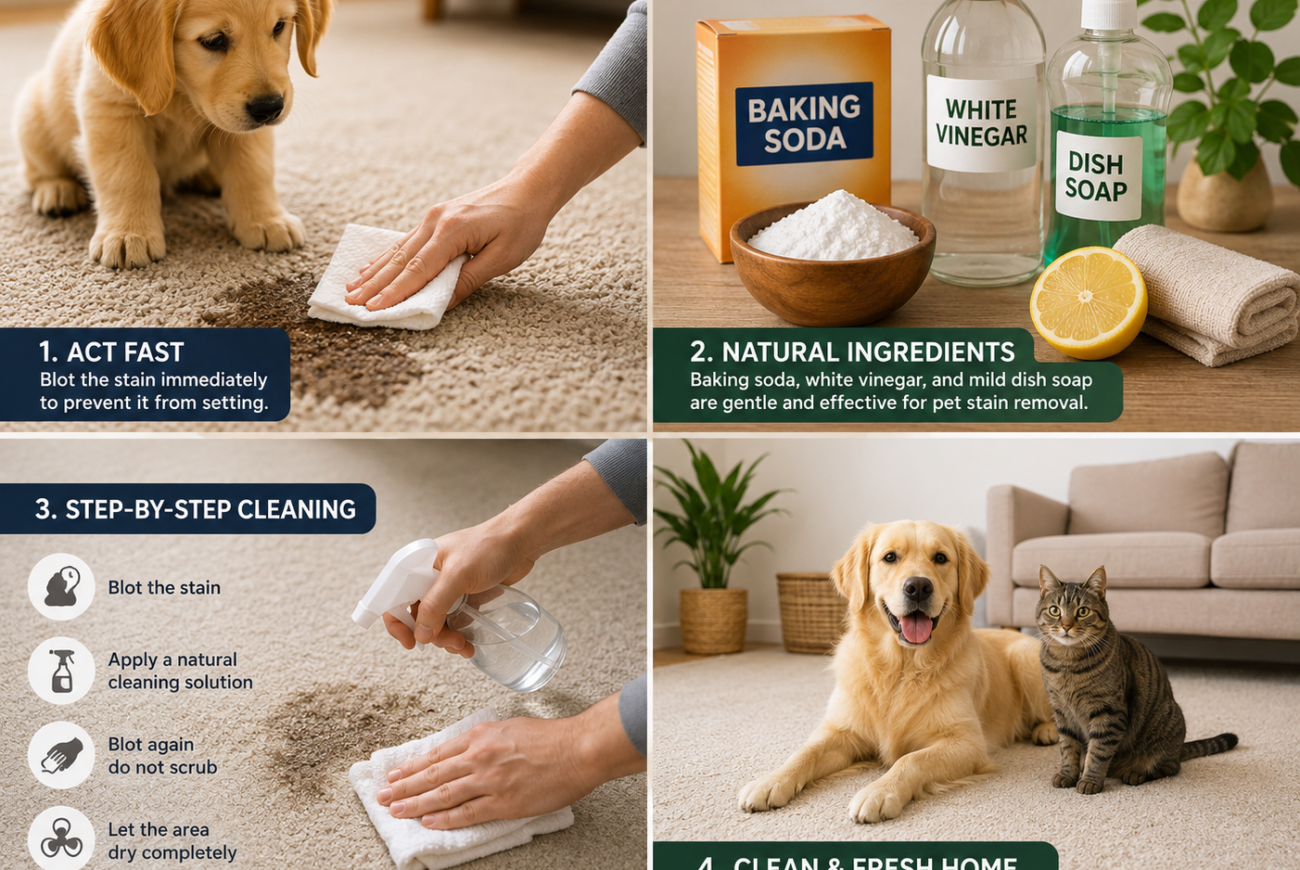
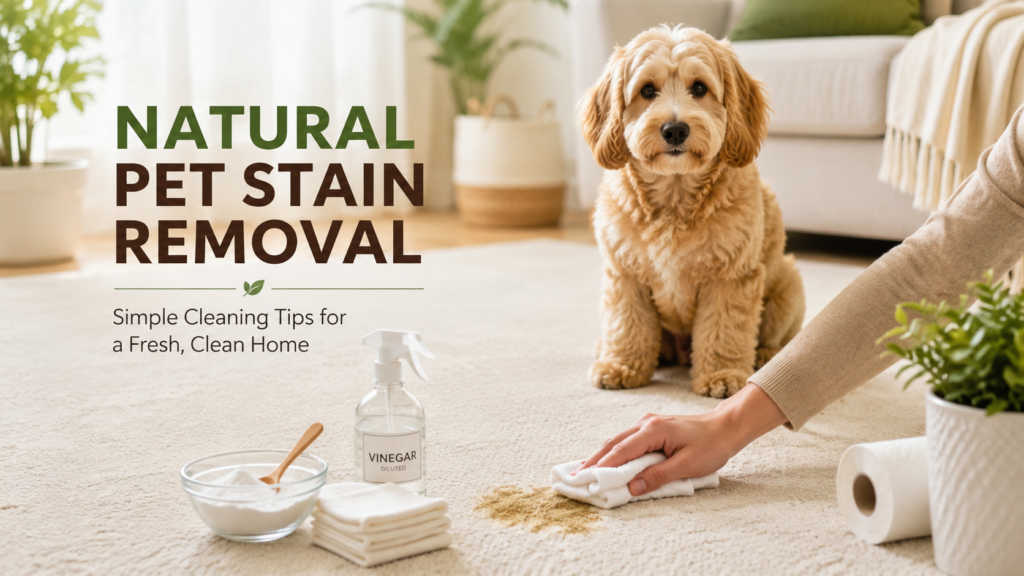
For fresh accidents, start by removing as much of the mess as possible. For liquid stains, blot rather than scrub. Press clean paper towels or a washable cloth against the area to absorb moisture, and replace the towel as it becomes wet.
Natural cleaning can be useful, but it does not mean that every household ingredient is suitable for every surface. Always check the manufacturer’s care instructions and test a solution on a hidden area first.
Natural Ingredients for Pet Stain Removal
Several common household ingredients are often used for basic pet stain cleaning. However, their usefulness depends on the type of stain and the surface.
How Baking Soda Helps Remove Pet Stains Naturally
Baking soda is commonly used to help absorb moisture and reduce odors. After cleaning and drying a suitable surface, a small amount can sometimes be sprinkled over the area and left for a short time before being thoroughly removed.
For washable fabrics, baking soda can also be used as part of a normal laundry routine when appropriate. Avoid leaving loose powder where your pet can easily lick or ingest it, and always follow the care instructions for the material.
How White Vinegar Can Help Clean Pet Stains
Diluted white vinegar is another popular household option for basic cleaning. However, it should not be treated as a universal stain remover because some materials may react poorly to acidic solutions.
If you use diluted vinegar, apply only a small amount to a compatible surface, avoid soaking the material, and allow the area to dry completely before allowing your pet back.
Using Mild Dish Soap for Fresh Pet Stains
A small amount of mild dish soap diluted with water may help lift some fresh surface messes, particularly on washable or water-safe materials.
The key is moderation. Too much soap can leave residue that attracts dirt, so use a small amount and wipe the area appropriately afterward.
How to Remove Pet Stains Naturally From Different Surfaces
The safest cleaning method depends heavily on the material. A solution that works on a washable fabric may not be suitable for hardwood or delicate upholstery.
Removing Fresh Pet Stains Naturally
Fresh stains should be treated as soon as possible.
Follow these basic steps:
- Remove any solid material carefully.
- Blot liquid with clean paper towels or a cloth.
- Continue blotting until you have removed as much moisture as possible.
- Apply an appropriate cleaning solution for the surface.
- Blot or wipe again rather than aggressively scrubbing.
- Allow the area to dry completely.
- Check the area again for remaining discoloration or odor.
For carpets and upholstery, avoid saturating the material because excessive moisture can make drying more difficult.
Removing Older or Dried Pet Stains Naturally
Older stains are usually more challenging because the residue has had more time to settle into the material.
Start by gently cleaning the surface and removing loose residue. If the material can safely tolerate water, lightly dampen the affected area and blot it. Repeat the process as needed rather than flooding the surface.
If a strong odor remains after several cleaning attempts, a natural household method may not be enough. In that situation, an enzyme-based pet stain and odor cleaner can be a practical next step.
For example, Rocco & Roxie Stain & Odor Eliminator on Amazon is designed for pet stains and odors and can be considered when household methods do not fully solve the problem. The product is listed among current Amazon pet-stain-cleaning results.
Cleaning Pet Stains From Carpet
Carpet can hold moisture and odors beneath the visible surface, so quick action matters.
First, blot the accident thoroughly. Next, use a small amount of an appropriate cleaning solution and blot again. Once the area has been cleaned, allow it to dry completely.
Avoid using excessive water because moisture trapped beneath carpet fibers can create additional problems.
If you need a product specifically intended for urine stains, Nature’s Miracle Dog Urine Destroyer Plus on Amazon is another option to consider for suitable surfaces. It is an enzymatic cleaner marketed for dog urine stains.
Cleaning Rugs and Upholstery
Before treating a rug or upholstered item, check its care label. Some materials can be damaged by water, vinegar, or excessive rubbing.
Blot fresh stains first. Then use a small amount of an appropriate solution and work from the outside of the stain toward the center. This can help prevent the stain from spreading.
For stubborn fabric or upholstery stains, choose a cleaner specifically labeled for the material rather than assuming that every household solution is safe.
Cleaning Hardwood Floors
Hardwood needs extra care because excessive moisture can damage the finish or seep between boards.
Blot liquid immediately and wipe the area with a slightly damp cloth suitable for the flooring. Avoid soaking the wood. If the stain has affected the finish or remains visible after gentle cleaning, follow the flooring manufacturer’s recommendations.
Step-by-Step Natural Pet Stain Removal Method
If you want a simple routine for how to remove pet stains naturally, use this five-step approach:
1. Remove the mess.
Pick up solid waste carefully and dispose of it appropriately.
2. Blot the area.
Use clean towels to absorb as much liquid as possible.
3. Choose a suitable cleaner.
Select a mild, surface-compatible option rather than using the strongest ingredient available.
4. Wipe away residue.
Remove leftover cleaning residue according to the material’s care instructions.
5. Dry completely.
Give the area enough time to dry before allowing your pet to return.
This approach works best when the accident is recent and the surface is suitable for gentle cleaning.
How to Remove Pet Odors Naturally After Cleaning
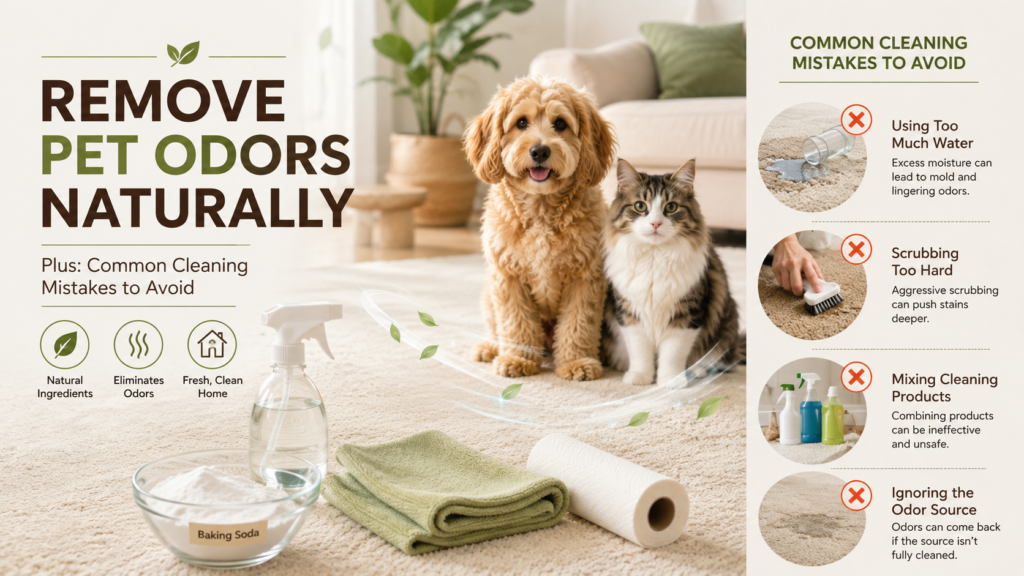
A stain can look gone while an odor remains. This is especially common with urine because liquid can move beyond the immediately visible area.
Start by making sure the area is actually clean and dry. Once the surface is dry, baking soda may be appropriate for some materials as an odor-absorbing step. Remove it thoroughly afterward.
However, repeated odors may indicate that residue remains deeper within the material. In those cases, a natural household method may not always be enough.
For cat urine specifically, Nature’s Miracle Cat Urine Destroyer Plus Foam on Amazon is an example of a pet-specific enzymatic cleaner designed for cat urine stains and suitable surfaces.
Most importantly, never mix different cleaning chemicals or homemade solutions. Some combinations can produce harmful fumes or damage surfaces.
Common Mistakes to Avoid When Cleaning Pet Stains
Even a simple cleaning job can become harder if the wrong technique is used.
- Scrubbing too aggressively: Hard rubbing can push a stain deeper into some fabrics and carpets.
- Using too much liquid: Excess moisture can make carpets and upholstery difficult to dry.
- Ignoring the odor: A visible stain may disappear while odor-causing residue remains.
- Mixing cleaning ingredients: Combining different cleaning chemicals can create dangerous reactions.
- Skipping a patch test: Always test a cleaning solution on a hidden section first.
- Ignoring surface instructions: Delicate materials may require specialized care.
- Allowing pets near wet areas: Keep animals away until the treated surface is dry and safe.
A careful approach protects both the material and your pet while giving the cleaning solution enough time to work.
Natural Pet Stain Removal: What Works Best?
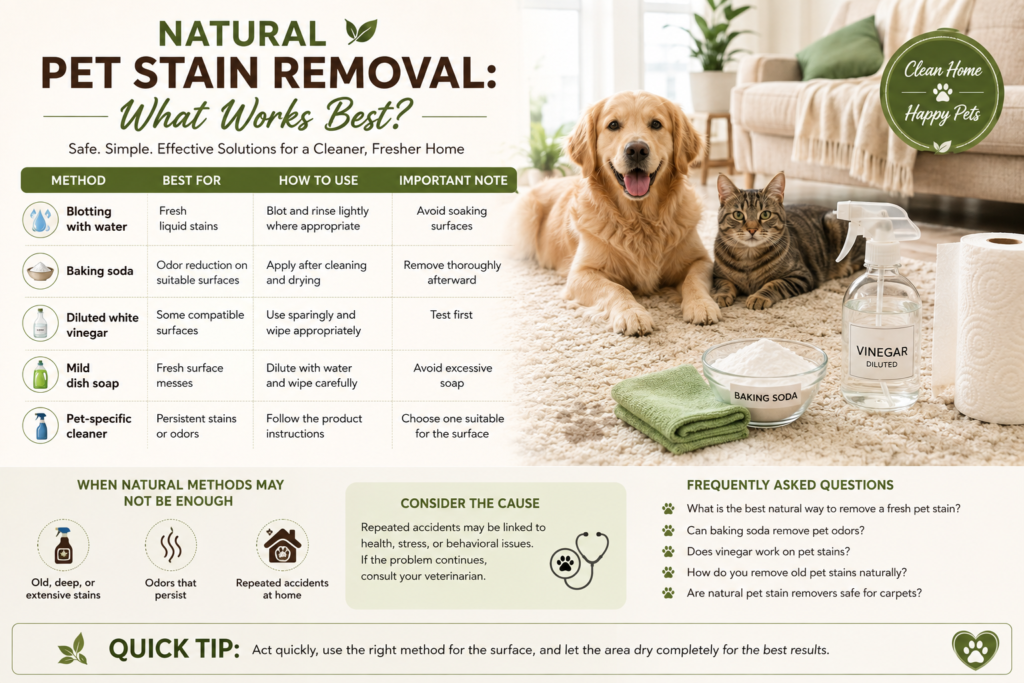
There is no single natural cleaner that works perfectly for every pet stain. The best option depends on the material, the type of accident, and whether the stain is fresh or old.
| Method | Best For | How to Use | Important Note |
|---|---|---|---|
| Blotting with water | Fresh liquid stains | Blot and rinse lightly where appropriate | Avoid soaking surfaces |
| Baking soda | Odor reduction on suitable surfaces | Apply after cleaning and drying | Remove thoroughly afterward |
| Diluted white vinegar | Some compatible surfaces | Use sparingly and wipe appropriately | Test first |
| Mild dish soap | Fresh surface messes | Dilute with water and wipe carefully | Avoid excessive soap |
| Pet-specific cleaner | Persistent stains or odors | Follow the product instructions | Choose one suitable for the surface |
The table highlights an important point: natural methods are not automatically better for every material. Surface compatibility should always come first.
When Natural Cleaning Methods May Not Be Enough
Sometimes a stain is too old, too deep, or too extensive for a basic household cleaning method. Professional cleaning may be worth considering when an odor continues after repeated cleaning or when a valuable rug, mattress, or upholstered item has been affected.
There is another issue to consider if accidents keep happening. Repeated indoor elimination is not necessarily just a cleaning problem. Changes in bathroom habits can sometimes have physical or behavioral causes.
For cats, repeated accidents outside the litter box can sometimes be associated with health, stress, environmental, or behavioral issues. If your cat’s bathroom habits change suddenly or the problem continues, speaking with a veterinarian is a sensible next step.
You can also learn more about your cat’s overall health and care needs in our guide to cat lifespan factors and preventive care.
Cleaning the stain solves the immediate mess, but identifying the reason for repeated accidents can help prevent the problem from returning.
Frequently Asked Questions About Natural Pet Stain Removal
What is the best natural way to remove a fresh pet stain?
Blot the stain quickly, use a surface-appropriate mild cleaning method, and let the area dry completely.
Can baking soda remove pet odors?
Baking soda can help reduce odors on some suitable surfaces, but it may not remove deeply embedded pet-waste residue.
Does vinegar work on pet stains?
Diluted vinegar can be useful for some household cleaning tasks, but it should be tested on the surface first and kept away from pets until dry.
How do you remove old pet stains naturally?
Old stains should be gently cleaned according to the surface material, although deeply embedded odors may require a specialized cleaner or professional treatment.
Are natural pet stain removers safe for carpets?
A natural cleaner may be suitable for some carpets, but always check the carpet’s care instructions and test the solution in an inconspicuous area first.
Conclusion
Knowing how to remove pet stains naturally can make everyday pet accidents easier to manage when you act quickly and choose a method that suits the surface. Blot fresh stains instead of scrubbing, use household ingredients carefully, avoid excessive moisture, and give treated areas enough time to dry. Baking soda, diluted vinegar, and mild soap may be useful for certain situations, but they are not universal solutions. When natural methods do not completely remove a stubborn stain or odor, a suitable pet-specific cleaner can be a practical alternative. If accidents happen repeatedly, consider speaking with a veterinarian to understand the possible reason behind the change.
